

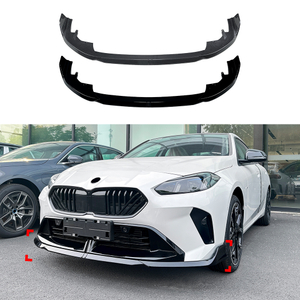
Canards are among the smallest aerodynamic additions a car can wear, yet they attract a surprising amount of attention. These small winglets, usually fitted to the front bumper corners, are designed to influence airflow around the front wheels and bodywork. Their size can be misleading, because poor placement or insecure mounting can create drag, noise, or damage without any useful benefit. Understanding what they do, and what they do not do, is the best starting point before choosing a design or material.
On track-focused cars, front aero is tuned as part of a wider package, with the splitter, undertray, and rear wing working together. On road cars, the same parts are often chosen mainly for appearance, which is understandable but changes the priorities for fitting and care. Either way, the details matter: angle, position, fixings, and clearance all influence whether the result is tidy, secure, and fit for purpose. This guide explains canards in plain terms, so owners can judge them on function rather than fashion alone.
What Canards Are Trying to Achieve
In simple terms, a canard is a small aerofoil that redirects air, creating a local pressure change and a vortex that can help manage airflow. Around the front wheels, that airflow management can reduce lift and improve stability, particularly when combined with a splitter. The effect is usually subtle on a road car, and it depends on speed, the rest of the aero package, and the canard’s angle.
It is also important to recognise that canards add drag, and a poorly angled example can increase drag without a useful gain. That is why track teams test, adjust, and record changes, rather than assuming a larger or more aggressive shape is automatically better. For road use, a restrained design that sits securely and clears everyday obstacles is usually the more sensible choice.
Why Position and Angle Matter More Than Size
Canards work in a narrow band of airflow at the bumper corner, so moving them a few centimetres can change how air meets the wheel arch. Angle matters for the same reason: too flat, and the effect may be negligible; too steep, and drag and turbulence may increase. Owners should therefore follow the maker’s guidance for placement, and avoid improvising a position that looks dramatic but fits poorly.
Designs, Materials, and Finishes Explained
Canards are made in several forms, from simple flat plates to shaped aerofoils with a curved profile and a reinforced edge. Flat plates are often lighter and simpler to fit, while shaped designs may manage airflow more cleanly but demand more precise mounting. Composite construction is popular because it can be stiff and light, but quality varies with lay-up, resin, edge sealing, and finish. Owners comparing carbon fiber canards should check mounting, angle, and material finish before buying.
Finish affects both appearance and longevity, because a gloss surface will show chips differently from a matte or painted surface. Owners should check whether edges are sealed, whether the surface can be cleaned with normal car shampoo, and how stone chips should be treated. A tidy underside and secure fixings are just as important as a glossy top surface, because both affect durability.
Fitting Safely and Checking Road Legality
Fitting usually involves drilling, bonding, or bolting to the bumper cover, and each method has different implications for removal and repair. Drilling creates permanent holes, bonding can be strong if surfaces are prepared correctly, and bolting requires access to secure backing. Whatever method is used, fixings should be checked for tightness, corrosion resistance, and whether they interfere with lights or sensors.
Road legality is a separate question, and owners should check local rules on projections, sharp edges, and pedestrian safety before fitting. Rules vary by place and vehicle use, so a design accepted for track use may not be suitable for everyday roads. Insurers and inspection authorities may also need to be informed, and keeping fitting instructions and receipts can help with those conversations.
Everyday Use, Damage, and Maintenance
Because canards sit low and forward, they are exposed to stone chips, kerbs, car-park barriers, and pressure washers. A small scrape may be cosmetic, but a cracked mounting point can allow vibration, which may loosen fixings over time. Regular checks are therefore worthwhile: look for cracks, loose bolts, peeling edges, and any change in alignment after a knock. Addressing a small issue early is usually cheaper and simpler than replacing a damaged part later.
Cleaning should be gentle, with soft cloths and a mild shampoo, avoiding abrasive pads and harsh chemicals near edges and fixings. When washing, avoid aiming high-pressure water directly at seams, because it can force moisture behind a bonded or bolted joint. If a canard is removed for repair or repainting, keep its fixings together and note its original position and angle.
Frequently Asked Questions
1. Do canards make a noticeable difference on a road car?
For most road driving, the difference is likely to be subtle, because speeds are lower and the aero package is rarely tuned as a whole. Owners may notice a slightly more planted feel at higher motorway speeds, but appearance is often the clearer change. Anyone expecting a dramatic handling transformation from small winglets alone is likely to be disappointed.
2. Can canards be fitted without drilling?
Some designs use adhesive bonding or existing mounting points, but suitability depends on the bumper shape and the load involved. Bonding requires clean, correctly prepared surfaces and enough curing time, while a poorly bonded part can detach at speed. If drilling is avoided, check the maker’s instructions carefully and inspect the bond regularly for lifting or movement.
3. Will canards increase fuel consumption?
Any added drag can, in theory, affect efficiency, but the effect of small, well-fitted winglets is usually very small. Driving style, tyre pressure, roof loads, and overall vehicle condition have a far larger influence on fuel use. Owners concerned about efficiency should prioritise a restrained design and secure fitting over a larger, more aggressive shape.
Conclusion
Canards are best judged as one small part of a wider aero story, not as a shortcut to track performance. When position, angle, mounting, and road rules are considered carefully, they can add character and a subtle functional benefit. When those details are ignored, they risk becoming a source of drag, damage, or disappointment.
